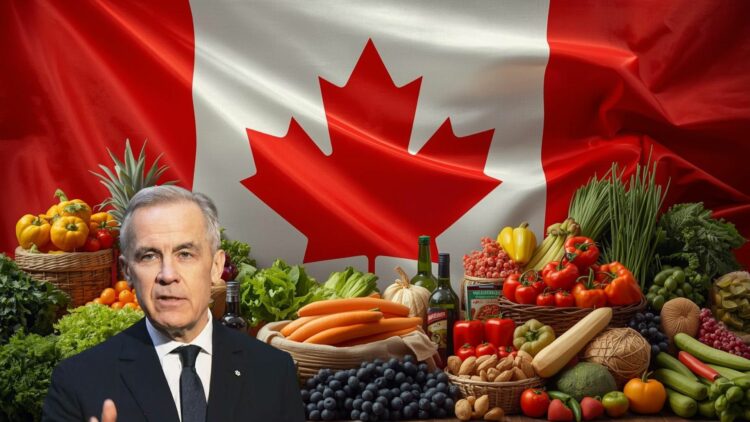
In February 2026 the federal government under leadership that includes former Bank of Canada governor Mark Carney enacted a major new support program for Canadian households. Known as the Groceries and Essentials Benefit, this initiative is designed to help families and individuals cope with rising food costs and everyday essentials that have placed pressure on household budgets across the country.
This is a landmark policy shift aimed at addressing persistent inflation in grocery prices and essential goods. While monthly benefits from federal programs such as the Canada Child Benefit, Canada Pension Plan, and Old Age Security continue as usual, the Groceries and Essentials Benefit represents a targeted intervention that will deliver additional direct support to eligible Canadians. For many households the first payments are scheduled to begin in the spring of 2026, and payment is coming in the weeks and months after that.
This detailed article explains what the Groceries and Essentials Benefit is, how it works, who qualifies, how much money recipients can expect, how the program interacts with other federal benefits, and how Canadians can prepare to receive their payments.
Why the Groceries and Essentials Benefit Was Introduced
In the years leading up to 2026 Canadians experienced sustained increases in the cost of groceries and household essentials. Fruits, vegetables, meat, dairy products, bread, personal care items and cleaning supplies all saw price increases well above historical averages. Although inflation has cooled from its peak, many families continued to feel the impact as incomes struggled to keep pace and regional price differences widened.
Policy makers recognized that long-standing income supports such as employment insurance, the Canada Child Benefit and provincial social assistance programs helped many households, but did not specifically target everyday cost pressures tied to food and essentials. Economists, community advocates and public opinion research all pointed to cost of living as a central concern for voters, particularly for lower- and middle-income households.
The idea for a Groceries and Essentials Benefit emerged out of this context. The goal was to create an income support stream that directly offsets the discretionary budget pressure caused by everyday cost increases. The federal government framed the benefit as part of a larger strategy to strengthen economic security, reduce financial anxiety for families, and support healthy diets by making groceries more affordable for people who are struggling the most.
How the Groceries and Essentials Benefit Works
The Groceries and Essentials Benefit is structured as a monthly direct payment to eligible Canadians. Unlike one-time emergency transfers, this benefit is ongoing and will be reviewed on an annual basis to determine if adjustments are needed based on economic conditions.
Key features of the program include:
Monthly Direct Payments: Eligible individuals and families receive a direct deposit to their bank account on a regular monthly schedule. Cheques are issued for those without direct deposit.
Income-Tested Eligibility: The benefit is targeted to individuals and families whose net income falls below specified income thresholds. These thresholds are designed to focus support where it is most needed.
Family Composition Adjustments: Payment amounts vary based on family size and whether recipients are supporting children or dependants.
Integration With Existing Benefits: The Groceries and Essentials Benefit is separate from existing income supports. It does not reduce other federal benefits or replace provincial assistance, although recipients must continue to file annual tax returns and report income to the Canada Revenue Agency (CRA) as usual.
Annual Review: The federal government will review the benefit level and eligibility each year to account for changing economic conditions, inflation trends, and fiscal priorities.
The overarching intent is to provide predictable monthly financial support that helps families manage their food budgets and meet essential household needs.
Payment Is Coming: What to Expect in 2026
For many eligible Canadians the first Groceries and Essentials Benefit payments are scheduled to begin in the spring of 2026. The phrase payment is coming reflects both the confirmed policy and the sense of anticipation among households who may qualify.
The typical schedule will look like this:
- March 2026: Initial awareness and eligibility checks begin.
- April 2026: First payments to eligible recipients via direct deposit.
- May 2026: Regular monthly payments continue.
- June 2026 and beyond: Payments continue on the same schedule unless eligibility status changes.
Most direct deposits occur in the middle of the month, similar to other federal benefit schedules. Cheque payments will be mailed in the same timeframes to recipients without direct deposit information on file.
The government has emphasized the need for recipients to ensure their banking details are up to date with CRA so that payments are not delayed.
Eligibility: Who Qualifies for the Benefit
Eligibility for the Groceries and Essentials Benefit is based on household income and composition. The goal is to focus support on Canadians who are most likely to face financial difficulty covering basic essentials such as food and hygiene products.
The key criteria are:
Age Requirements:
- Individuals must be at least 18 years old.
- Families with children under 18 may qualify based on the income of the household.
Income Thresholds:
- Net income in the previous tax year must fall below specified limits.
- Higher income households are phased out of eligibility gradually.
Residency Rules:
- Applicants must be residents of Canada for tax purposes.
- Non-resident or temporary residents may not qualify.
Tax Filing Requirement:
- Applicants must have filed a tax return for the previous year.
- This allows CRA to verify income and household composition.
Not Based on Employment Status Alone:
- Both working and non-working individuals can qualify if they meet the income and residency criteria.
Because the benefit is income-tested using tax returns, many households are encouraged to file their taxes early and accurately to maximize their chances of qualification.
How Much Money Recipients Will Receive
Payment amounts vary depending on household size and income level. The benefit is structured to provide more support to lower-income households while gradually reducing support as income rises within eligibility ranges.
While exact figures may vary by year and will be published by CRA ahead of payment cycles, the general structure is:
- Single Individuals: A base monthly amount designed to offset a portion of typical food and household essentials costs.
- Families With Children: Increased monthly payments that reflect larger household needs.
- Couples and Multi-Person Households: Adjusted amounts that take into account the number of dependants and total household income.
Because the benefit is assessed annually, recipients could see adjustments from year to year based on changes in income, household size, and broader economic measures such as inflation.
The federal government has emphasized that this benefit is non-taxable, meaning recipients do not have to pay income tax on the amounts they receive.
How the New Benefit Interacts With Other Federal Programs
The Groceries and Essentials Benefit is not intended to replace existing income supports. It is designed to complement them. That means a household might receive:
- Canada Child Benefit (CCB)
- Canada Pension Plan (CPP) benefits
- Old Age Security (OAS) benefits
- Guaranteed Income Supplement (GIS) for low-income seniors
- Employment Insurance (EI) benefits
- Provincial or territorial social assistance
Importantly, receiving the Groceries and Essentials Benefit does not reduce eligibility for these other programs. However, recipients must continue to file their taxes so that CRA can verify income for all income-tested programs.
Provincial and territorial programs may also provide additional cost-of-living supports, depending on where a household resides. These operate independently of the federal benefit but can stack with federal support to increase overall household assistance.
How to Apply and What Documentation Is Required
Because the Groceries and Essentials Benefit is administered through CRA, many Canadians will not need to submit a separate application. Eligibility is determined through tax records.
However, to ensure that CRA has the correct information, households should:
File Annual Taxes:
- Filing a tax return ensures that CRA has accurate income and family composition data.
Update Direct Deposit Information:
- Make sure banking details are current to avoid cheque mail delays.
Confirm Residency Status With CRA:
- Residency indicators help determine eligibility and ensure that CRA records match current living situations.
In some cases CRA may request additional verification or documentation, especially if income or family status appears to have changed dramatically from the previous tax year.
Planning Ahead: Tips for Households
The introduction of the Groceries and Essentials Benefit has brought a renewed focus on personal finances and budgeting. Households preparing for payments should consider the following:
Understand Your Household Finances:
Know your monthly income, expenses and savings needs. The new benefit is designed to help with essentials but is not a substitute for a long-term budgeting strategy.
Keep Accurate Records:
Accurate income reporting through annual taxes is critical. Filing early ensures eligibility assessments happen sooner.
Stay Alert for CRA Notices:
CRA will communicate eligibility and payment notices through mail and online portals. Respond promptly to any requests.
Review Provincial Supports:
Some provinces offer additional cost-of-living relief or food price supports. Stackable federal and provincial benefits can amplify household support.
Public Reaction and Economic Perspectives
The Groceries and Essentials Benefit has elicited a broad range of responses from economists, policy experts, advocacy groups and the public.
Supporters argue that the benefit is a targeted, equitable way to assist households with the increasing costs of basic goods. They point out that the traditional measures of inflation do not always capture the real price pressures that families experience at the grocery store checkout line. A direct income support addresses this gap without distorting market prices or creating unnecessary market interference.
Critics raise concerns about the long-term cost of ongoing payments and potential impact on federal budgets. Some economists caution that if not carefully calibrated, income supports could indirectly affect demand inflation, although the counterargument is that many recipients merely need help meeting current expenses, not discretionary spending.
Consumer advocacy groups focused on food security have generally welcomed the measure, noting that even small increases in income can reduce stress, improve nutrition choices and lessen reliance on food banks or emergency assistance.
The policy continues to be debated in economic forums, media outlets and community spaces, but the implementation in early 2026 has solidified it as part of Canada’s social support framework.
Looking Ahead: Program Reviews and Future Adjustments
The Groceries and Essentials Benefit includes provisions for annual review. Economic conditions change, and one of the design goals is to maintain relevance in a dynamic fiscal environment.
Each year CRA and federal finance authorities will review:
Inflation Trends:
- Adjust payment levels if grocery and essential prices rise significantly.
Household Income Patterns:
- Re-evaluate eligibility thresholds if median incomes shift.
Labour Market Conditions:
- Incorporate labour participation changes that affect household finances.
Program Efficiency and Reach:
- Monitor uptake rates and program impacts to determine if modifications are needed.
These reviews will provide transparency and responsiveness, ensuring the benefit continues to serve its intended purpose without becoming stale or disconnected from real economic conditions.
The Groceries and Essentials Benefit represents a significant addition to Canada’s social support architecture. For eligible families and individuals, payment is coming regularly beginning in spring 2026, offering predictable monthly relief that directly targets everyday expenses.
Whether you are a single person balancing tight finances, a family supporting children, a senior on fixed income, or someone navigating the complexities of contemporary household budgeting, the new benefit has the potential to make a tangible difference.
To access it, ensure your tax filings are up to date, review your income situation, confirm direct deposit details with CRA and watch for eligibility notices early in 2026. With annual reviews built into the program, this benefit is not just a short-term fix but the start of a sustained effort to help Canadians manage cost of living pressures tied to groceries and essential household needs.